Real Estate Statistics
| Average Price | $333K |
|---|---|
| Lowest Price | $595 |
| Highest Price | $6.2M |
| Total Listings | 1,666 |
| Avg. Days On Market | 132 |
| Avg. Price/SQFT | $138 |
Listing Status (active listings)
Living in Little Rock, Arkansas
A local guide to neighborhoods, lifestyle, parks, schools, restaurants, and what daily life feels like in Arkansas’s capital city
Little Rock is the kind of capital city that can be hard to describe in one sentence. It is historic, outdoorsy, creative, practical, and a little spread out. It has riverfront trails and old neighborhoods, medical campuses and coffee shops, state government buildings and live music rooms, polished west-side subdivisions and front-porch streets shaded by old trees.
For people moving to Central Arkansas, Little Rock is usually the place they start. It is the state capital, the largest city in Arkansas, and the center of the Little Rock-North Little Rock-Conway metro area. The city itself has a population of a little more than 200,000, while the broader metro is home to more than 770,000 people.
But Little Rock does not feel like one single thing. Downtown Little Rock feels different from Hillcrest. Hillcrest feels different from The Heights. The Heights feels different from Chenal Valley. Chenal feels different from Midtown, Brodie Creek, Pleasant Valley, Otter Creek, SoMa, Stifft Station, or the neighborhoods around Cammack Village.
That variety is part of the appeal. You can live near trails, near restaurants, near hospitals, near private schools, near the river, near newer construction, near historic homes, or in a quieter residential pocket with quick access to the rest of the city.
Quick Profile: Little Rock at a Glance
Little Rock is located in Pulaski County along the south bank of the Arkansas River. It is the political and cultural center of the state, but it is also one of the most practical places to live in Central Arkansas because so much of the region’s employment, healthcare, education, dining, shopping, and recreation is concentrated here.
The city is home to major medical institutions, state government offices, corporate headquarters, museums, parks, colleges, historic districts, and some of the most recognizable neighborhoods in Arkansas.
A few things Little Rock is known for:
- The Arkansas River and River Trail system
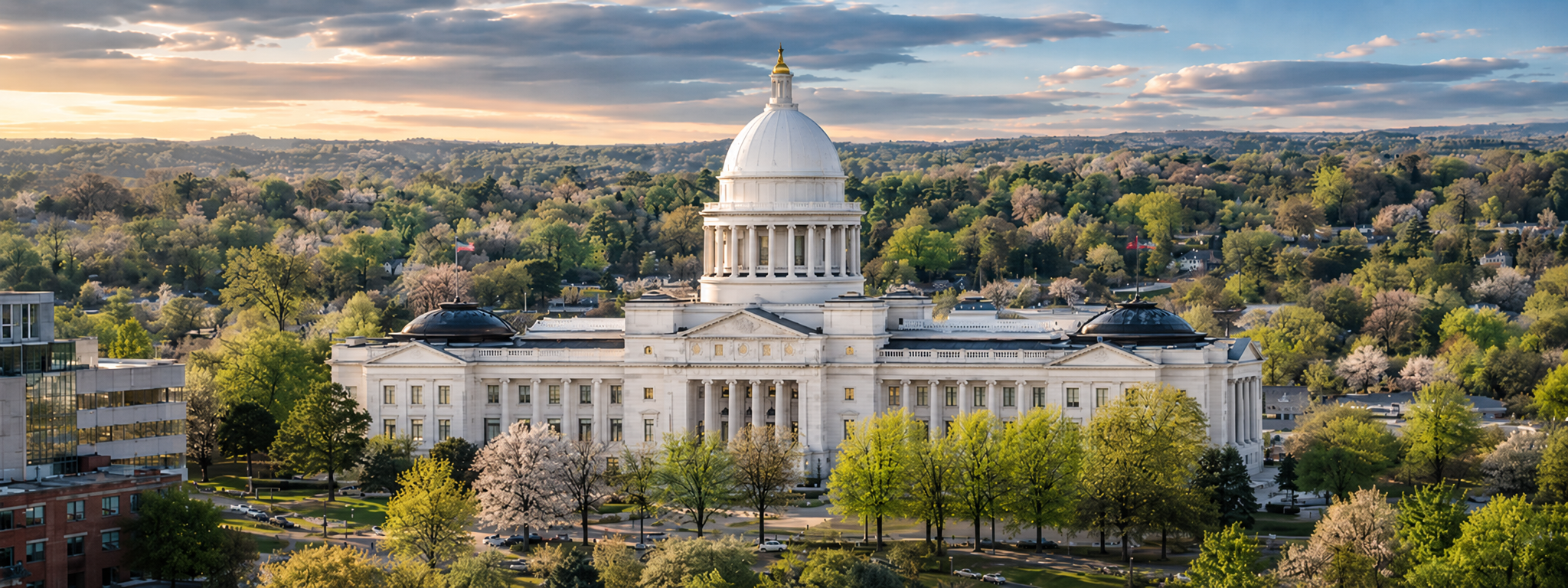
- The State Capitol and government center
- UAMS, Arkansas Children’s Hospital, Baptist Health, and major healthcare employment
- The Clinton Presidential Center
- Little Rock Central High School National Historic Site
- Historic neighborhoods like Hillcrest, The Heights, and the Quapaw Quarter
- West Little Rock shopping, restaurants, subdivisions, and newer housing
- Pinnacle Mountain, Two Rivers Park, Big Dam Bridge, and outdoor access
- A growing arts, food, coffee, and local business scene
What Living in Little Rock Feels Like
Little Rock feels like a city of pockets. That is one of the first things people should understand when they are relocating here.
Some parts feel urban and walkable. Some feel historic and established. Some feel suburban and convenient. Some feel tucked into hills and trees. Some feel close to everything, while others feel more private and spread out.
That means “living in Little Rock” can look very different depending on where you land.
You might spend Saturday morning walking through Hillcrest for coffee, brunch, and local shops. You might ride bikes along the Arkansas River Trail, take kids to the Museum of Discovery, meet friends for dinner in SoMa, catch a show at Robinson Center, or head west toward Pinnacle Mountain for a hike.
In West Little Rock, daily life often centers around convenience. Shopping, restaurants, medical offices, grocery stores, gyms, schools, and neighborhoods are spread along corridors like Chenal Parkway, Cantrell Road, Rodney Parham, Bowman, and Highway 10.
Closer to the core of the city, daily life may feel more connected to local restaurants, older homes, parks, porches, sidewalks, and neighborhood character.
That is the real advantage of Little Rock. It gives you options.
Little Rock Neighborhoods and Areas to Know
Little Rock is not a city where every neighborhood feels the same. For buyers, that can be a huge benefit, but it also means it helps to understand the personality of each area before deciding where to focus.
Downtown and the River Market
Downtown Little Rock is the city’s government, business, event, and riverfront hub. The River Market area includes restaurants, bars, the main library, museums, entertainment venues, and access to the Arkansas River Trail. UAMS describes the River Market District as an area filled with restaurants, shops, art galleries, museums, the main library, bars, and a seasonal farmers market.
Housing downtown is more limited than in other parts of the city, but you will find condos, lofts, apartments, and some historic residential pockets nearby. It is a good area to understand if you want urban convenience, event access, or a shorter commute into the central business district.
SoMa
SoMa, short for South Main, has become one of Little Rock’s most recognizable local districts. It is known for restaurants, local shops, neighborhood events, creative energy, and a more independent, locally grown feel. It is not as large as West Little Rock or as polished as The Heights, but it has a distinct personality.
This is the kind of area people often discover through food first, then start paying attention to the surrounding neighborhoods.
Hillcrest
Hillcrest is one of Little Rock’s classic neighborhoods. It has older homes, mature trees, sidewalks in many areas, locally owned restaurants, coffee shops, and a village-like commercial strip along Kavanaugh Boulevard.
Homes in Hillcrest often include bungalows, cottages, craftsman-style homes, renovated historic properties, and homes with a lot of architectural character. It is one of the places people tend to mention when they want charm, walkability, and an established neighborhood feel.
The Heights
The Heights sits near Hillcrest but has its own personality. It is one of Little Rock’s most established and sought-after areas, known for tree-lined streets, boutique shopping, local restaurants, and a mix of older homes, updated properties, and high-end remodels.
The Heights often appeals to buyers who want classic Little Rock character with access to restaurants, shops, parks, and central locations.
Cammack Village
Cammack Village is its own small city surrounded by Little Rock, but it functions as part of the central Little Rock lifestyle. It sits near The Heights, the Little Rock Zoo, War Memorial Park, and the University of Arkansas at Little Rock area.
Because it is small and centrally located, Cammack Village is often part of the conversation for people looking around Midtown, Hillcrest, and The Heights.
Midtown
Midtown is one of Little Rock’s most practical areas because of its central location. Park Plaza Mall, medical offices, restaurants, grocery access, War Memorial Stadium, and several major corridors are nearby.
Housing in Midtown varies by pocket, with mid-century homes, ranch-style properties, smaller homes, apartments, and renovated houses. For many people, Midtown works because it is less about one specific “scene” and more about access.
West Little Rock
West Little Rock is one of the biggest relocation search areas in the city. It is broad, so it should not be treated as one neighborhood. It includes multiple subdivisions, commercial corridors, schools, parks, churches, medical offices, and shopping areas.
This is where many buyers look when they want newer homes, larger homes, subdivision amenities, garages, newer construction, or easier access to daily conveniences. Chenal Parkway, Highway 10, Cantrell Road, Bowman, Rahling Road, and Kanis Road all play a role in how people navigate the area.
West Little Rock can feel suburban, but not isolated. You are still connected to the rest of the city, while also having a lot of daily needs close by.
Chenal Valley
Chenal Valley is one of Little Rock’s best-known master-planned areas and one of the city’s strongest luxury home markets. It is known for larger homes, gated communities, golf course neighborhoods, rolling terrain, wooded lots, and convenient access to shopping and dining along Chenal Parkway.
Not every home in Chenal is ultra-luxury, but the area includes some of Little Rock’s most expensive residential real estate. It is also one of the places where buyers often look for executive homes, newer homes, and more polished neighborhood settings.
Pleasant Valley
Pleasant Valley is an established West Little Rock area known for larger lots, mature trees, country club access, and traditional homes. It has a quieter, more residential feel than the commercial corridors nearby, while still being close to shopping, restaurants, and major roads.
Brodie Creek and Bowman Area
The Brodie Creek and Bowman Road area offers a mix of subdivisions, townhomes, and convenient access to shopping, restaurants, and schools. It can be a practical fit for people who want West Little Rock access without necessarily being deep into Chenal or Highway 10.
Otter Creek
Otter Creek is in southwest Little Rock, near I-30 and the Outlets of Little Rock. It has a different feel from central Little Rock and West Little Rock, with subdivision-style neighborhoods, larger residential pockets, and convenient interstate access.
Quapaw Quarter
The Quapaw Quarter is one of Little Rock’s most historic residential areas, known for Victorian-era homes, historic architecture, and proximity to downtown. It is a good example of Little Rock’s older architectural character, especially for people who appreciate restoration, history, and homes with personality.
Parks, Trails, and Outdoor Life
One of Little Rock’s strongest advantages is how close the outdoors feels, even inside the city.
The Arkansas River Trail is one of the most important recreational assets in Central Arkansas. The City of Little Rock describes it as the region’s premier outdoor recreational trail, with a 15.6-mile loop on both sides of the Arkansas River.
The trail system connects people to river views, parks, bridges, downtown, North Little Rock, and other outdoor destinations. For runners, cyclists, walkers, and families who want easy access to fresh air, it is one of the best parts of living here.
A few outdoor places to know:
Big Dam Bridge
The Big Dam Bridge is one of Little Rock’s most recognizable outdoor landmarks. Little Rock’s tourism site notes that it stretches 4,226 feet across the Arkansas River. It connects trail systems and gives walkers and cyclists a wide-open river view.
Two Rivers Park
Two Rivers Park sits west of the city where the Arkansas and Little Maumelle rivers meet. It is popular for walking, biking, open green space, and access to the River Trail system.
Pinnacle Mountain State Park
Pinnacle Mountain is just west of Little Rock and is one of the most popular hiking spots in Central Arkansas. Arkansas Tourism highlights biking along the River Trail to Pinnacle Mountain and walking through Two Rivers Park as part of the city’s outdoor appeal.
Riverfront Park
Riverfront Park gives downtown Little Rock a public green space along the river, with trails, sculpture, playground areas, and access to the River Market area.
War Memorial Park
War Memorial Park sits near Midtown and includes the Little Rock Zoo, War Memorial Stadium, golf, green space, and recreational facilities.
Little Rock is not a mountain town, but it does not feel disconnected from nature. Trails, rivers, parks, and wooded neighborhoods are part of daily life here.
Restaurants, Coffee Shops, and Local Flavor
Little Rock’s food scene is more interesting than many newcomers expect. It is not just chain restaurants and Southern staples, though there are plenty of familiar options too.
The city has long-running local favorites, newer chef-driven restaurants, coffee shops, breweries, food trucks, bakeries, and neighborhood spots that give each part of town its own rhythm.
Areas to explore include:
- Hillcrest and The Heights for local restaurants, coffee, brunch, and neighborhood dining
- SoMa for creative local food, shops, and events
- River Market and downtown for nightlife, restaurants, and visitor-friendly options
- West Little Rock for convenience, newer restaurants, national brands, and everyday dining
- Stifft Station and Capitol View for smaller neighborhood spots and historic residential character
A few well-known Little Rock names often come up in local food conversations, including The Root Café, Brave New Restaurant, Loblolly Creamery, Lost Forty Brewing, Heights Taco & Tamale, Boulevard Bread Company, Kemuri, Raduno, and many more.
This is an area where the page could eventually link out to separate Home Sweet Arkansas guides, like “Best Coffee Shops in Little Rock,” “Where to Eat in Hillcrest,” or “A Local Guide to SoMa.”
Arts, Culture, and History
Little Rock has more cultural weight than its size might suggest.
The Clinton Presidential Center sits near the Arkansas River and is one of the city’s most visited cultural landmarks. The Arkansas Museum of Fine Arts reopened in 2023 after a major transformation, with the museum reporting a final capital campaign total of $170.8 million.
The Robinson Center brings concerts, touring performances, and live events downtown. The Rep, Ballet Arkansas, local galleries, and smaller venues add to the arts scene.
Little Rock also holds an important place in American civil rights history. Little Rock Central High School National Historic Site is managed by the National Park Service and preserves the story of the Little Rock Nine and the 1957 desegregation crisis. The NPS describes Central High as the epicenter of a confrontation and a catalyst for change in the enforcement of civil rights after Brown v. Board of Education.
For people who want a city with history, museums, music, architecture, and civic importance, Little Rock has a deeper story than a quick relocation search usually captures.
Schools and Education in Little Rock
Little Rock has a wide mix of education options, including public schools, private schools, charter schools, magnet programs, higher education, and medical education.
The Little Rock School District is one of the major public school systems in the city. LRSD describes itself as the state’s third largest school district and notes resources for gifted and talented programs, career and technical education, and other academic paths.
Little Rock is also home to a number of private and independent schools that are commonly researched by families moving to the area, including Pulaski Academy, Episcopal Collegiate, Little Rock Christian Academy, Mount St. Mary Academy, Catholic High School for Boys, and others.
Higher education and medical education are a major part of the city as well. The University of Arkansas at Little Rock, Philander Smith University, Arkansas Baptist College, and the University of Arkansas for Medical Sciences all contribute to the city’s educational and employment landscape.
For anyone moving with school needs in mind, it is worth looking carefully at attendance zones, application timelines, school choice options, commute patterns, and the specific programs that matter to your household.
Jobs, Healthcare, and the Local Economy
Little Rock’s economy is more diverse than many people realize. The city is a center for healthcare, government, banking, finance, aerospace, technology, education, agriculture, and advanced manufacturing. The City of Little Rock specifically identifies healthcare, aerospace, banking and finance, technology, advanced manufacturing, government, education, and agriculture among the major industries represented in the city.
Major employers and institutions include:
- State of Arkansas government
- UAMS
- Arkansas Children’s Hospital
- Baptist Health
- CHI St. Vincent
- Dillard’s corporate headquarters
- Stephens Inc.
- Simmons Bank
- Dassault Falcon Jet
- Windstream
- University of Arkansas at Little Rock
- Little Rock Air Force Base nearby in Jacksonville
Healthcare is especially important here. UAMS, Arkansas Children’s, Baptist Health, CHI St. Vincent, and surrounding clinics and specialty practices make Little Rock a regional medical hub.
Aerospace is another major piece of the economy. Dassault Falcon Jet announced a $100 million Little Rock expansion expected to create 800 additional jobs, further strengthening the city’s aviation and aerospace presence.
Getting Around Little Rock
Little Rock is a driving city. There are some walkable districts, especially around downtown, Hillcrest, The Heights, SoMa, and certain neighborhood pockets, but most residents rely on a car for daily life.
Major roads and corridors include:
- I-30
- I-40 nearby through North Little Rock
- I-430
- I-630
- I-530
- Highway 10 / Cantrell Road
- Chenal Parkway
- Markham Street
- University Avenue
- Rodney Parham Road
- Bowman Road
- Colonel Glenn Road
One advantage of Little Rock is that commutes are often more manageable than in larger metro areas. Traffic exists, especially around construction, school times, hospital areas, downtown, and major west-side corridors, but many people moving from larger cities find the drive times more reasonable.
For air travel, Bill and Hillary Clinton National Airport is located east of downtown. Clinton National says it offers service from six major airlines and more than 80 daily flights, with nonstop service and one-stop connections to destinations around the world.
Housing and Real Estate in Little Rock
Little Rock’s housing market is broad because the city itself is broad.
You can find historic homes, downtown condos, craftsman bungalows, mid-century ranch homes, golf course properties, gated neighborhoods, luxury estates, starter homes, townhomes, new construction, and acreage-style properties at the edges of the city.
The biggest mistake relocating buyers make is assuming Little Rock is one market with one personality. It is not. A home search in Hillcrest looks very different from a search in Chenal Valley. A search in Midtown looks different from Otter Creek. A search near downtown looks different from a search along Highway 10.
In general:
Hillcrest, The Heights, Cammack Village, and the Quapaw Quarter tend to offer more historic character, older homes, and central-city convenience.
Midtown offers central access, practical housing options, and proximity to hospitals, shopping, and major roads.
West Little Rock offers many of the city’s larger subdivisions, newer homes, shopping corridors, and luxury neighborhoods.
Chenal Valley and Pleasant Valley are often part of the conversation for buyers seeking higher-end homes, golf course settings, gated neighborhoods, or more polished residential environments.
Southwest Little Rock and Otter Creek offer different price points, subdivision styles, and access to I-30 and south/west routes.
Because Little Rock has so much variety, it helps to start with lifestyle and commute before jumping straight into listings. Where will you work? How often do you want to be downtown? Do you want older-home character or newer-home function? Do you care more about walkability, yard size, schools, trails, restaurants, or convenience?
Those answers will narrow the search much faster than simply asking, “What are the best neighborhoods in Little Rock?”
Things to Know Before Moving to Little Rock
Little Rock has a lot going for it, but like any city, it is not perfect. The most helpful way to understand it is with context.
The city is spread out, so location matters. Two homes with the same Little Rock mailing address can offer very different daily routines.
Some neighborhoods are highly walkable by Arkansas standards, but most of the city still requires a car.
Housing styles vary dramatically. If you want a historic home, you will likely look in different areas than someone who wants newer construction or a gated subdivision.
Traffic is manageable compared with larger cities, but certain corridors can be frustrating at peak times.
School research matters. Families should review district zones, school choice options, private school timelines, charter options, and commute logistics before choosing a home.
Outdoor access is one of Little Rock’s best quality-of-life advantages. The river, trails, parks, and nearby hiking are not just tourist attractions. They are part of how many locals actually live.
Is Little Rock a Good Place to Live?
Little Rock can be a very good place to live if you want a city with real amenities but do not want the scale, traffic, or cost of a much larger metro.
It has the state capital, major hospitals, strong cultural institutions, good local restaurants, outdoor access, established neighborhoods, and a wide range of housing options. It also has enough variety that people can choose very different lifestyles within the same city.
For some people, Little Rock is a place to build a career. For others, it is a place to raise a family, downsize, start over, retire, invest in a historic home, or get closer to nature without leaving city conveniences behind.
The key is finding the part of Little Rock that matches the way you actually want to live.
Planning a Move to Little Rock?
If you are relocating to Little Rock, start with the lifestyle first. Explore the neighborhoods. Drive the commute at the time of day you would actually be on the road. Visit the parks, restaurants, schools, and grocery stores you would use every week.
And if you want a more complete starting point, download our Little Rock relocation guide or explore the neighborhood guides throughout Home Sweet Arkansas.
For help understanding the local housing market, neighborhoods, and available homes, Pixel Properties at REAL can help you compare areas and make a confident move.